Causal inference and Bayesian modelling using Norwegian national registries and MoBa to estimate long-term effects of stimulant medication and special education on school performance.
ADHD
Etiology, clinical course, cognitive mechanisms, and treatment effects in ADHD
Investigates attention-deficit/hyperactivity disorder across the lifespan by combining Norwegian national health and education registries, the MoBa pregnancy cohort, clinical cohorts, and controlled experiments. This work spans early screening and developmental trajectories, comorbidities, prenatal and socioeconomic risk factors, cognitive mechanisms, and the long-term effects of stimulant medication and special educational support on school performance and mental health.
Highlighted papers
-
Is the Norwegian Education System Effective in Supporting Students With Special Educational Needs? Evidence From Population-Based Longitudinal Data
-
Selective enhancement of cost sensitivity by methylphenidate in adult ADHD: a randomized placebo-controlled trial
-
Early and repeated screening detects children with persistent attention-deficit/hyperactivity disorder
No matching items
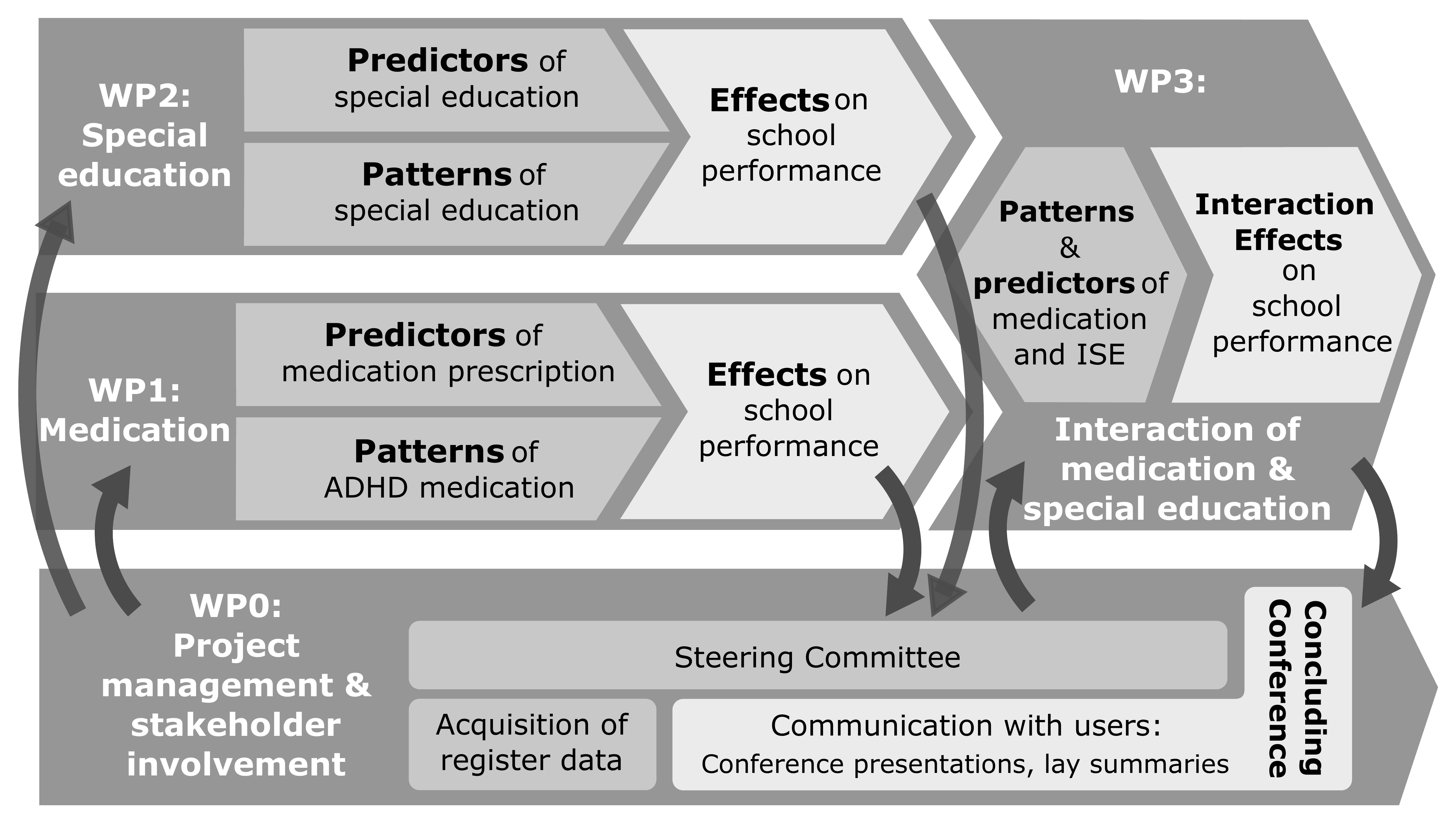
Attention-deficit/hyperactivity disorder (ADHD) is a central thematic focus across my applied and methodological research. Combining population-wide Norwegian health and education registries, the Norwegian Mother, Father and Child Cohort Study (MoBa), clinical cohorts, and experimental studies, my colleagues and I study ADHD from early childhood into adulthood.
A major current focus is estimating the long-term effects of stimulant medication and special educational assistance on school performance and psycho-social outcomes of children with ADHD using target trial emulation and Bayesian structural modelling (see the project overview). Complementing this work, we investigate early screening, developmental trajectories, comorbid anxiety and depression, geographic and family-level variation in diagnosis and treatment, and prenatal environmental and nutritional risk factors.
In earlier experimental and neuroimaging work, we also used computational models of reinforcement learning and decision making to examine cognitive and neural mechanisms in adults with ADHD and how stimulant medication alters these processes.
Research projects
Current projects
Past projects
A register study of regional variations and parental effects on diagnosis and pharmacological treatment of ADHD
Population-wide register study investigating geographic variation and family-level determinants of ADHD diagnosis and pharmacological treatment in Norway.
Selected papers:
Prenatal exposure to toxicants & childhood neurodevelopmental disorders & cognitive functions
Cohort investigation of prenatal exposure to environmental toxicants and metals in relation to ADHD symptoms, cognitive functions, and neurodevelopmental outcomes.
The effect of prenatal nutrition on ADHD
Prospective pregnancy cohort research using Bayesian hierarchical models to evaluate associations between maternal diet quality during pregnancy and child ADHD and developmental outcomes.
Selected papers:
Effect of Methylphenidate on Decision Making in ADHD
Experimental and computational modelling research on how methylphenidate influences reinforcement learning, cost sensitivity, and decision making in adults with ADHD.
Influence of stimulant medication on brain processes for decision making in ADHD
Neuroimaging study of how stimulant medication modulates brain networks and decision-making processes in adults with ADHD.
Selected papers:
Decision making and learning in ADHD
Behavioral and computational modelling investigation of reinforcement learning and decision-making mechanisms in ADHD.
Selected papers:
No matching items
Publications
2026
Journal Article
Selective enhancement of cost sensitivity by methylphenidate in adult ADHD: a randomized placebo-controlled trial
Psychological Medicine, 56, e234
2025
Journal Article
Long-term effect of pharmacological treatment on academic achievement of Norwegian children diagnosed with ADHD: a target trial emulation
International Journal of Epidemiology, 54(2), dyaf010
Journal Article
Low perceived social support in mothers during pregnancy and early childhood; associations with anxiety and ADHD symptoms in children at 3 and 8 years
Social Psychiatry and Psychiatric Epidemiology, 60, 895–903
Journal Article
Functional Impairment Related to ADHD From Preschool to School Age
Journal of Attention Disorders, 29, 220–230
2024
Journal Article
Do maternal anxiety and depressive symptoms predict anxiety in children with and without ADHD at 8 years?
European Child & Adolescent Psychiatry, 33, 3169–3178
Journal Article
Early and repeated screening detects children with persistent attention-deficit/hyperactivity disorder
European Child & Adolescent Psychiatry, 33, 1807–1815
2023
Journal Article
Developmental disorders among Norwegian-born children with immigrant parents
Child and Adolescent Psychiatry and Mental Health, 17(1), 3
Abstract
BACKGROUND: Risk of being diagnosed with different developmental disorders is found to vary with immigrant background. Knowledge about such differences in Norway are a starting point for equity in health services quality, and for early identification and prevention. Our objective was to assess the risk of receiving diagnoses of developmental disorders among children born in Norway (2006-2017) to two or one immigrant parent compared to children with two Norwegian-born parents. METHODS: Information on developmental disorders was from the Norwegian Patient Register (NPR) and information on immigrant background, parental country of origin, parental education, and household income from Statistics Norway. We estimated hazard ratios (HR) with Cox proportional hazard regressions. With children with Norwegian background as reference category, we estimated HRs for immigration background and region of origin. All analyses were adjusted for sex, year of birth, parental education, and household income. RESULTS: Children with two immigrant parents had a lower risk of receiving any developmental disorder diagnosis [HR 0.80 (95% CI 0.77, 0.82)] than children with Norwegian background, and lower risk of being diagnosed with attention deficit hyperactivity disorder (ADHD) diagnosis [HR 0.24 (95% CI 0.22, 0.27)], learning difficulties diagnosis [HR 0.39 (95% CI 0.33, 0.47)], and behavioral and emotional disorders [HR 0.52 (95% CI 0.49, 0.55)]. Children with immigrant parents had higher hazard than Norwegian background children of autism spectrum disorder (ASD) [HR 2.21 (95% CI 2.04, 2.39)], mental retardation [HR 1.84 (95% CI 1.64, 2.07)], language disorders [HR 1.30 (95% CI 1.20, 1.40)], and unspecified developmental disorders [HR 1.22 (95% CI 1.17, 1.28)]. Children with only one immigrant parent had lower risk of diagnoses than children of two immigrants. CONCLUSION: Risk of receiving a diagnosis of various developmental disorders varied substantially by immigrant background. Understanding the underlying mechanisms of these differences is warranted to ensure equity in health services and timely intervention.
Journal Article
Anxiety and depression from age 3 to 8 years in children with and without ADHD symptoms
Scientific Reports, 13, 15376
Journal Article
Attention-deficit/hyperactivity disorder from preschool to school age: change and stability of parent and teacher reports
European Child & Adolescent Psychiatry, 32, 1947–1955
2022
Journal Article
The effect of special educational assistance in early childhood education and care on psycho-social difficulties in elementary school children
Child and Adolescent Psychiatry and Mental Health, 16(1), 14
Abstract
Three to seven percent of pre-schoolers have developmental problems or child psychiatric disorders. Randomized controlled trials (RCTs) indicate that interventions in early childhood education and care (ECEC) improve long-term outcomes of children from disadvantaged backgrounds. It is unknown if such effects generalize beyond the well-structured context of RCTs and to children who may not have a disadvantaged background but have developmental problems or psychiatric disorders. METHODS: We used data from the population-based Norwegian Mother, Father and Child Cohort Study, recruiting pregnant women from 1999 to 2009, with child follow-up from ages 6, 18, and 36 months to ages 5, 7, and 8 years. This sub-study included 2499 children with developmental problems or psychiatric disorders at age five. We investigated the effects of special educational assistance at age five on mother-reported internalizing, externalizing, and communication problems at age eight. We analysed bias due to treatment by indication with directed acyclic graphs, adjusted for treatment predictors to reduce bias, and estimated effects in different patient groups and outcome domains with a hierarchical Bayesian model. RESULTS: In the adjusted analysis, pre-schoolers who received special educational assistance had on average by 0.1 (0.04-0.16) standardised mean deviation fewer psycho-social difficulties in elementary school. CONCLUSION: In a sample of children from mostly higher socioeconomic backgrounds we estimate a positive effects of special educational assistance during the transition from preschool to the school years. It may therefore be considered as an intervention for pre-schoolers with developmental or behaviour problems. More research with improved measurements of treatment and outcomes is needed to solidify the findings and identify success factors for the implementation of special educational assistance in ECEC.
Journal Article
Cognitive, emotional, and social functioning of preschoolers with attention deficit hyperactivity problems
BMC Psychiatry, 22(1), 78
Abstract
Attention Deficit Hyperactivity Disorder (ADHD) is associated with deficits in different functional domains. It remains unclear if deficits in different domains are equally strong in early childhood, and which deficits are specific to ADHD. Here, we describe functional domains in preschoolers and assess deficits in children with ADHD problems, by comparing them to preschoolers with other mental health problems or who develop typically. METHODS: The ADHD Study assessed 1195 ca. 3.5 years old preschoolers through a semi-structured parent interview, parent questionnaires, and with neuropsychological tests. We determined functional domains by applying factor analytic methods to a broad set of questionnaire- and test-scales. Using resulting factor scores, we employed a Bayesian hierarchical regression to estimate functional deficits in children with ADHD. RESULTS: We found that preschoolers’ functioning could be described along the seven relatively independent dimensions activity level and regulation, executive function, cognition, language, emotion regulation, introversion, and sociability. Compared to typically developing preschoolers, those with ADHD had deficits in all domains except introversion and sociability. Only deficits in activity level regulation and executive functions were larger than 0.5 standardised mean deviations and larger than deficits of children with other mental health problems. CONCLUSIONS: Preschoolers with ADHD have deficits in multiple functional domains, but only impairments in activity level and regulation and executive functions are specific for ADHD and large enough to be clinically significant. Research on functioning in these domains will be important for understanding the development of ADHD, and for improving treatment and prevention approaches.
2021
Journal Article
The associations between maternal and child diet quality and child ADHD – findings from a large Norwegian pregnancy cohort study
BMC Psychiatry, 21(1), 139
Abstract
Background: Attention Deficit Hyperactivity Disorder (ADHD) is a prevalent neurodevelopmental disorder. Effective long-term treatment options are limited, which warrants increased focus on potential modifiable risk factors. The aim of this study was to investigate associations between maternal diet quality during pregnancy and child diet quality and child ADHD symptoms and ADHD diagnosis. Methods: This study is based on the Norwegian Mother, Father and Child Cohort Study (MoBa). We assessed maternal diet quality with the Prenatal Diet Quality Index (PDQI) and Ultra-Processed Food Index (UPFI) around mid-gestation, and child diet quality using the Diet Quality Index (CDQI) at 3 years. ADHD symptoms were assessed at child age 8 years using the Parent Rating Scale for Disruptive Behaviour Disorders. ADHD diagnoses were retrieved from the Norwegian Patient Registry. Results. In total, 77,768 mother-child pairs were eligible for studying ADHD diagnoses and 37,787 for ADHD symptoms. Means (SD) for the PDQI, UPFI and CDQI were 83.1 (9.3), 31.8 (9.7) and 60.3 (10.6), respectively. Mean (SD) ADHD symptom score was 8.4 (7.1) and ADHD diagnosis prevalence was 2.9% (male to female ratio 2.6:1). For one SD increase in maternal diet index scores, we saw a change in mean (percent) ADHD symptom score of - 0.28 (- 3.3%) (CI: - 0.41, - 0.14 (- 4.8, - 1.6%)) for PDQI scores and 0.25 (+ 3.0%) (CI: 0.13, 0.38 (1.5, 4.5%)) for UPFI scores. A one SD increase in PDQI score was associated with a relative risk of ADHD diagnosis of 0.87 (CI: 0.79, 0.97). We found no reliable associations with either outcomes for the CDQI, and no reliable change in risk of ADHD diagnosis for the UPFI. Conclusions: We provide evidence that overall maternal diet quality during pregnancy is associated with a small decrease in ADHD symptom score at 8 years and lower risk for ADHD diagnosis, with more robust findings for the latter outcome. Consumption of ultra-processed foods was only associated with increased ADHD symptom score of similar magnitude as for overall maternal diet quality, and we found no associations between child diet quality and either outcome. No causal inferences should be made based on these results, due to potential unmeasured confounding.
2020
Journal Article
Prenatal exposure to perfluoroalkyl substances and associations with symptoms of attention-deficit/hyperactivity disorder and cognitive functions in preschool children
International Journal of Hygiene and Environmental Health, 223(1), 80–92
Abstract
BACKGROUND: Perfluoroalkyl substances (PFASs) are persistent organic pollutants that are suspected to be neurodevelopmental toxicants, but epidemiological evidence on neurodevelopmental effects of PFAS exposure is inconsistent. We investigated the associations between prenatal exposure to PFASs and symptoms of attention-deficit/hyperactivity disorder (ADHD) and cognitive functioning (language skills, estimated IQ and working memory) in preschool children, as well as effect modification by child sex. MATERIAL AND METHODS: This study included 944 mother-child pairs enrolled in a longitudinal prospective study of ADHD symptoms (the ADHD Study), with participants recruited from The Norwegian Mother, Father and Child Cohort Study (MoBa). Boys and girls aged three and a half years, participated in extensive clinical assessments using well-validated tools; The Preschool Age Psychiatric Assessment interview, Child Development Inventory and Stanford-Binet (5th revision). Prenatal levels of 19 PFASs were measured in maternal blood at week 17 of gestation. Multivariable adjusted regression models were used to examine exposure-outcome associations with two principal components extracted from the seven detected PFASs. Based on these results, we performed regression analyses of individual PFASs categorized into quintiles. RESULTS: PFAS component 1 was mainly explained by perfluoroheptane sulfonate (PFHpS), perfluorooctane sulfonate (PFOS), perfluorohexane sulfonate (PFHxS) and perfluorooctanoic acid (PFOA). PFAS component 2 was mainly explained by perfluorodecanoic acid (PFDA), perfluoroundecanoic acid (PFUnDA) and perfluorononanoic acid (PFNA). Regression models showed a negative association between PFAS component 1 and nonverbal working memory [β = -0.08 (CI: -0.12, -0.03)] and a positive association between PFAS component 2 and verbal working memory [β = 0.07 (CI: 0.01, 0.12)]. There were no associations with ADHD symptoms, language skills or IQ. For verbal working memory and PFAS component 2, we found evidence for effect modification by child sex, with associations only for boys. The results of quintile models with individual PFASs, showed the same pattern for working memory as the results in the component regression analyses. There were negative associations between nonverbal working memory and quintiles of PFOA, PFNA, PFHxS, PFHpS and PFOS and positive associations between verbal working memory and quintiles of PFOA, PFNA, PFDA and PFUnDA, with significant relationships mainly in the highest concentration groups. CONCLUSIONS: Based on our results, we did not find consistent evidence to conclude that prenatal exposure to PFASs are associated with ADHD symptoms or cognitive dysfunctions in preschool children aged three and a half years, which is in line with the majority of studies in this area. Our results showed some associations between PFASs and working memory, particularly negative relationships with nonverbal working memory, but also positive relationships with verbal working memory. The relationships were weak, as well as both positive and negative, which suggest no clear association - and need for replication.
2019
Journal Article
Estimating the Strength of Associations Between Prenatal Diet Quality and Child Developmental Outcomes: Results From a Large Prospective Pregnancy Cohort Study
American Journal of Epidemiology, 188(11), 1902–1912
Abstract
Our aim in this study was to estimate the strength of associations between prenatal diet quality and child behavioral, language, and motor functions in the Norwegian Mother and Child Cohort Study (1999-2008). We created a prenatal diet quality index (PDQI) based on adherence to Norwegian dietary guidelines. Child outcomes were defined as sum scores on the Child Behavior Checklist, the Ages and Stages Questionnaire, and the Child Development Index at ages 18, 36, and 60 months. Using a longitudinal cohort study design and Bayesian hierarchical modeling, we estimated association strengths using inverse probability weighting to account for selection bias. In total, 27,529 mother-child pairs were eligible for inclusion. A 1-standard-deviation increase in PDQI score was associated with an absolute reduction in outcome sum scores of 0.02-0.21 and a 3%-7% relative decrease, with larger decreases seen for language and motor functions than for behavioral functions. PDQI scores were inversely associated with all child functions, but the estimated strength of each association was low. The results indicate that the observed variations in PDQI scores in an industrialized Western society may not profoundly influence the child functions studied.
Journal Article
Screening with an ADHD-specific rating scale in preschoolers: A cross-cultural comparison of the Early Childhood Inventory-4
Psychological Assessment, 31(8), 985–994
Abstract
The Early Childhood Inventory-4 (ECI-4) Hyperactivity-Impulsivity (HI) and Inattention (IA) subscales are screeners for attention-deficit/hyperactivity disorder (ADHD). There have been few studies of the screening properties of these subscales, particularly outside the United States. We investigated the classification accuracy of the parent and teacher versions of the HI and IA subscales and the cross-cultural validity of the cutoff values based on norms from a United States sample. The present study was part of the Norwegian Mother and Child Cohort Study. Parents and teachers rated boys (n = 332) and girls (n = 319) with the ECI-4 (mean Age 3.5 years). Interviewers who were blind to the ratings used the Preschool Age Psychiatric Assessment Interview to assign ADHD diagnoses. The ECI-4 HI and IA subscales showed acceptable accuracy in identifying ADHD in boys and girls (areas under the curve ranged from .67 to .85). In a multivariate regression analysis, the parent and teacher HI subscale scores significantly contributed to ADHD identification, but not the IA subscale scores. To achieve the necessary sensitivity to detect children with ADHD, lower cutoff levels than those specified by the United States ECI-4 norms were needed. For screening purposes, the parent and teacher ECI-4 showed acceptable accuracy in identifying preschoolers at risk for ADHD, and it may be sufficient to use the HI subscale scores. The suggested cutoff values provided by the United States ECI-4 norms had limited cross-cultural validity. (PsycINFO Database Record (c) 2019 APA, all rights reserved).
2018
Journal Article
Diagnosis of hyperkinetic disorder among children in Norway
Tidsskrift for Den norske legeforening, 138(20)
Abstract
BACKGROUND. Hyperkinetic disorder is one of the most frequently used psychiatric diagnoses among children and adolescents in Norway. It has previously been shown that use of the diagnosis varies widely by county. MATERIAL AND METHOD. We estimated the proportion of children with hyperkinetic disorder using patient data from the Norwegian Patient Registry and population data from the Norwegian Population Registry. The estimations were made for both Norway as a whole and by county. Assessment and documentation of the diagnosis were surveyed by linking the Norwegian Patient Registry and the Norwegian Mother and Child Cohort Study. We reviewed medical records from specialist mental health services for children and adolescents and assessed whether the diagnoses met the research criteria for hyperkinetic disorder. RESULTS. At 12 years of age, 5.4 % of Norwegian boys and 2.1 % of Norwegian girls had been diagnosed with hyperkinetic disorder by specialist health services. The proportion of children varied between 1.4 % and 5.5 % among the counties. A review of medical records for 549 children showed that 49 % of the diagnoses were reliably documented in the records. The main reasons that the diagnosis was not documented were a discrepancy between the information in the medical record and diagnostic criteria (38 %) and inadequate differential diagnostic assessment (46 %). INTERPRETATION. There was considerable geographic variation in the proportions of children and adolescents with hyperkinetic disorder. A large percentage of the diagnoses were not reliably documented in medical records. The guideline for evaluation, diagnostics and medical recordkeeping should be reviewed.
Journal Article
Attention-Deficit/Hyperactivity Disorder in Preschoolers: The Accuracy of a Short Screener
Journal of the American Academy of Child and Adolescent Psychiatry, 57(6), 428–435
Abstract
OBJECTIVE. Although early and accurate screening is required for the remediation of attention-deficit/hyperactivity disorder (ADHD), possible gender differences have not been extensively studied. We examined the classification accuracy of the parent and preschool teacher version of the Strengths and Difficulties Questionnaire (SDQ) hyperactivity-inattention (HI) subscale in girls and boys. METHOD. The study was part of the Norwegian Mother and Child Cohort Study (MoBa). Parents and preschool teachers rated a total of 238 girls and 276 boys (mean age 3.5 years) with the SDQ HI subscale. Blinded to the parent and teacher ratings, interviewers classified the children by ADHD diagnoses with the Preschool Age Psychiatric Assessment Interview. RESULTS. Areas under the curves for the parent HI subscale scores were good for both girls and boys (0.87 and 0.80, respectively). Preschool teacher classifications were fair (0.76) for girls and poor (0.62) for boys, a significant difference (p = .017). The subscale accurately identified children without ADHD at low parent scores (≤4), and fairly accurately identified ADHD at high scores (≥9), with maximum probabilities of finding true cases of 0.75 in girls and 0.55 in boys. Intermediate scores gave the best balance between sensitivity and specificity with low probabilities of correctly identifying children with ADHD. CONCLUSION. The parental SDQ HI subscale was useful for screening for ADHD in preschool girls and boys. For preschool teachers, the subscale was useful for screening girls.
2017
Journal Article
The drift diffusion model as the choice rule in reinforcement learning
Psychonomic Bulletin & Review, 24(4), 1234–1251
Abstract
Current reinforcement-learning models often assume simplified decision processes that do not fully reflect the dynamic complexities of choice processes. Conversely, sequential-sampling models of decision making account for both choice accuracy and response time, but assume that decisions are based on static decision values. To combine these two computational models of decision making and learning, we implemented reinforcement-learning models in which the drift diffusion model describes the choice process, thereby capturing both within- and across-trial dynamics. To exemplify the utility of this approach, we quantitatively fit data from a common reinforcement-learning paradigm using hierarchical Bayesian parameter estimation, and compared model variants to determine whether they could capture the effects of stimulant medication in adult patients with attention-deficit hyperactivity disorder (ADHD). The model with the best relative fit provided a good description of the learning process, choices, and response times. A parameter recovery experiment showed that the hierarchical Bayesian modeling approach enabled accurate estimation of the model parameters. The model approach described here, using simultaneous estimation of reinforcement-learning and drift diffusion model parameters, shows promise for revealing new insights into the cognitive and neural mechanisms of learning and decision making, as well as the alteration of such processes in clinical groups.
Journal Article
Increased default-mode variability is related to reduced task-performance and is evident in adults with ADHD
NeuroImage: Clinical
Abstract
Insufficient suppression and connectivity of the default mode network (DMN) is a potential mediator of cognitive dysfunctions across various disorders, including attention deficit/hyperactivity disorder (ADHD). However, it remains unclear if alterations in sustained DMN suppression, variability and connectivity during prolonged cognitive engagement are implicated in adult ADHD pathophysiology, and to which degree methylphenidate (MPH) remediates any DMN abnormalities. This randomized, double-blinded, placebo-controlled, cross-over clinical trial of MPH (clinicaltrials.gov/ct2/show/NCT01831622) explored large-scale brain network dynamics in 20 adults with ADHD on and off MPH, compared to 27 healthy controls, while performing a reward based decision-making task. DMN task-related activation, variability, and connectivity were estimated and compared between groups and conditions using independent component analysis, dual regression, and Bayesian linear mixed models. The results show that the DMN exhibited more variable activation patterns in unmedicated patients compared to healthy controls. Group differences in functional connectivity both between and within functional networks were evident. Further, functional connectivity between and within attention and DMN networks was sensitive both to task performance and case-control status. MPH altered within-network connectivity of the DMN and visual networks, but not between-network connectivity or temporal variability. This study thus provides novel fMRI evidence of reduced sustained DMN suppression in adults with ADHD during value-based decision-making, a pattern that was not alleviated by MPH. We infer from multiple analytical approaches further support to the default mode interference hypothesis, in that higher DMN activation variability is evident in adult ADHD and associated with lower task performance.
2016
Journal Article
Modelling ADHD: a review of ADHD theories through their predictions for computational models of decision-making and reinforcement learning
Neuroscience and Biobehavioral Reviews, 71, 633–656
Abstract
Attention Deficit Hyperactivity Disorder (ADHD) is characterized by altered Decision-making (DM) and reinforcement learning (RL), for which competing theories propose alternative explanations. Computational modelling contributes to understanding DM and RL by integrating behavioural and neurobiological findings, and could elucidate pathogenic mechanisms behind ADHD. This review of neurobiological theories of ADHD describes predictions for the effect of ADHD on DM and RL as described by the Drift-Diffusion Model of DM (DDM) and a basic RL model. Empirical studies employing these models are also reviewed. While theories often agree on how ADHD should be reflected in model parameters, each theory implies a unique combination of predictions. Empirical studies agree with the theories’ assumptions of a lowered DDM drift rate in ADHD, while findings are less conclusive for boundary separation. The few studies employing RL models, support a lower choice sensitivity in ADHD, but not an altered learning rate. The discussion outlines research areas for further theoretical refinement in the ADHD field.
Journal Article
The influence of maternal dietary exposure to dioxins and PCBs during pregnancy on ADHD symptoms and cognitive functions in Norwegian preschool children
Environment International, 94, 649–660
Abstract
BACKGROUND. Polychlorinated dibenzo-p-dioxins/dibenzofurans (dioxins) and polychlorinated biphenyls (PCBs) are persistent organic pollutants (POPs) with potentially adverse impact on child neurodevelopment. Whether the potential detrimental effects of dioxins and PCBs on neurodevelopment are of specific or unspecific character is not clear. OBJECTIVES. The purpose of the current study was to examine the influence of maternal dietary exposure to dioxins and PCBs on ADHD symptoms and cognitive functioning in preschoolers. We aimed to investigate a range of functions, in particular IQ, expressive language, and executive functions. MATERIAL AND METHODS. This study includes n=1024 children enrolled in a longitudinal prospective study of ADHD (the ADHD Study), with participants recruited from The Norwegian Mother and Child Cohort Study (MoBa). Boys and girls aged 3.5years participated in extensive clinical assessments using well-validated tools; The Preschool Age Psychiatric Assessment interview (PAPA), Stanford-Binet 5th revision (SB-5), Child Development Inventory (CDI), and Behavior Rating Inventory of Executive Function, Preschool version (BRIEF-P). Maternal dietary exposure to dioxins and PCBs was estimated based on a validated food frequency questionnaire (FFQ) answered mid-pregnancy and a database of dioxin and PCB concentrations in Norwegian foods. Exposure to dioxins and dioxin-like PCBs (dl-compounds) was expressed in total toxic equivalents (TEQ), and PCB-153 was used as marker for non-dioxin-like PCBs (ndl-PCBs). Generalized linear and additive models adjusted for confounders were used to examine exposure-outcome associations. RESULTS. Exposure to PCB-153 or dl-compound was not significantly associated with any of the outcome measures when analyses were performed for boys and girls together. After stratifying by sex, adjusted analyses indicated a small inverse association with language in girls. An increase in the exposure variables of 1 SD was associated with a reduction in language score of -0.2 [CI -0.4, -0.1] for PCB-153 and -0.2 [CI -0.5, -0.1] for dl-compounds in girls. For boys, exposure to PCB-153 or dl-compounds was not associated with language skills. The difference between sex-specific associations was not statistically significant (p-value=0.13). No sex-specific effects were observed for ADHD-symptoms, IQ scores, or executive functions. CONCLUSIONS. We found no indications that variation in current low-level exposure to PCB-153 or dl-compounds in Norway is associated with variation ADHD-symptoms, verbal/non-verbal IQ, or executive functions including working memory in preschoolers. However, our findings indicated that maternal dietary exposure to PCB-153 or dl-compounds during pregnancy was significantly associated with poorer expressive language skills in preschool girls, although the sex-specific associations were not significantly different.
Report
ADHD i Norge. En statusrapport
Norwegian Institute of Public Health
2015
Journal Article
A meta-analysis of decision-making and attention in adults with ADHD
Journal of Attention Disorders, 19(5), 355–367
Abstract
OBJECTIVE. Deficient reward processing has gained attention as an important aspect of ADHD, but little is known about reward-based decision-making (DM) in adults with ADHD. This article summarizes research on DM in adult ADHD and contextualizes DM deficits by comparing them to attention deficits. METHOD. Meta-analytic methods were used to calculate average effect sizes for different DM domains and continuous performance task (CPT) measures. RESULTS. None of the 59 included studies (DM. 12 studies; CPT. 43; both. 4) had indications of publication bias. DM and CPT measures showed robust, small to medium effects. Large effect sizes were found for a drift diffusion model analysis of the CPT. CONCLUSION. The results support the existence of DM deficits in adults with ADHD, which are of similar magnitude as attention deficits. These findings warrant further examination of DM in adults with ADHD to improve the understanding of underlying neurocognitive mechanisms.
2014
Journal Article
Convergent and discriminant validity of psychiatric symptoms reported in The Norwegian Mother and Child Cohort Study at age 3 years with independent clinical assessment in the Longitudinal ADHD Cohort Study
Norsk Epidemiologi = Norwegian Journal of Epidemiology, 24(1-2)
Abstract
Epidemiological studies often use parent questionnaires to assess children’s development and mental health. To date, few studies have investigated the validity of parent questionnaires with standardized clinical assessments as criterion. The current study examines discriminant and convergent validity of parent questionnaires for symptoms of Attention Deficit Hyperactivity Disorder (ADHD), Oppositional Defiance Disorder (ODD), and Conduct Disorder (CD) as well as symptoms of Separation Anxiety employed in the Norwegian Mother and Child Cohort Study by using structured clinical interviews performed 5 months later in the Longitudinal ADHD Cohort Study as a criterion. The comparison of confirmatory factor analysis models and examination of factor correlations indicate convergent and discriminant validity of MoBa parent questionnaires for preschool children, especially for the assessment of ADHD and ODD/CD. Future research should attempt to further improve parent questionnaires, examine their validity in representative samples, and explicitly test their utility for screening.
No matching items