Effect of Methylphenidate on Decision Making in ADHD
Experimental and computational modelling research on how methylphenidate influences reinforcement learning, cost sensitivity, and decision making in adults with ADHD.
Applies formal computational models—such as reinforcement learning and drift diffusion sequential-sampling models—together with behavioral experiments and neuroimaging (fMRI, EEG) to study how humans learn from rewards, integrate social advice, and make decisions under uncertainty. This line of research also translates cognitive models to clinical populations, examining how decision-making and learning mechanisms differ in adults with ADHD and respond to stimulant medication.
My research career started in the Centre for Adaptive Behavior and Cognition at the Max Planck Institute for Human Development in Berlin. This research line, in which I am currently not active, used experiments and mathematical modeling to understand decision making in a social context. In one paper we investigated, using mathematical modeling of choices in public goods games, if cooperation in groups is better explained by simple reinforcement learning, or by reciprocity. In hindsight it is not surprising that reciprocity explained behavior better. At the time a number of researchers proposed reinforcement learning as models of cooperation, because they naturally explain how cooperation unravels in social dilemmas like the public goods game or the prisoners dilemma.
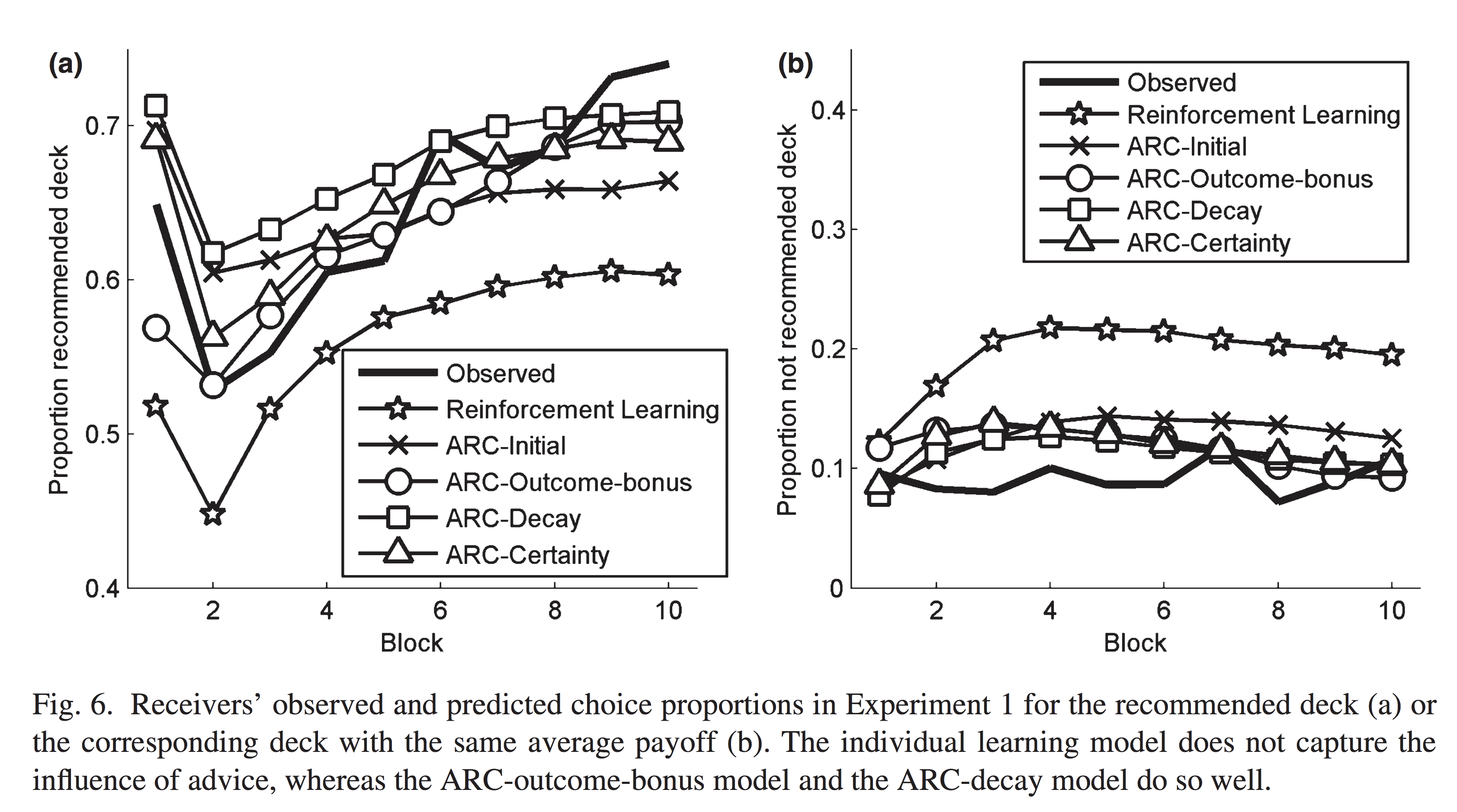
Other papers in this area examined how basic reinforcement learning models can be modified to account for advice taking or for pattern learning. In this area fall also some papers that have mostly an interest in decision making in common, such as the one where we learned that economists did not use much rational analysis when deciding about taking a PSA test and that some ignorance can be better than imperfect knowledge when predicting outcomes of sports matches.
Building on this foundation, I used and sometimes still use mathematical modelling of decision making and learning, functional magnetic resonance imaging (fMRI), and EEG to understand human operant learning and decision making, and how decision processes differ in adults with ADHD.
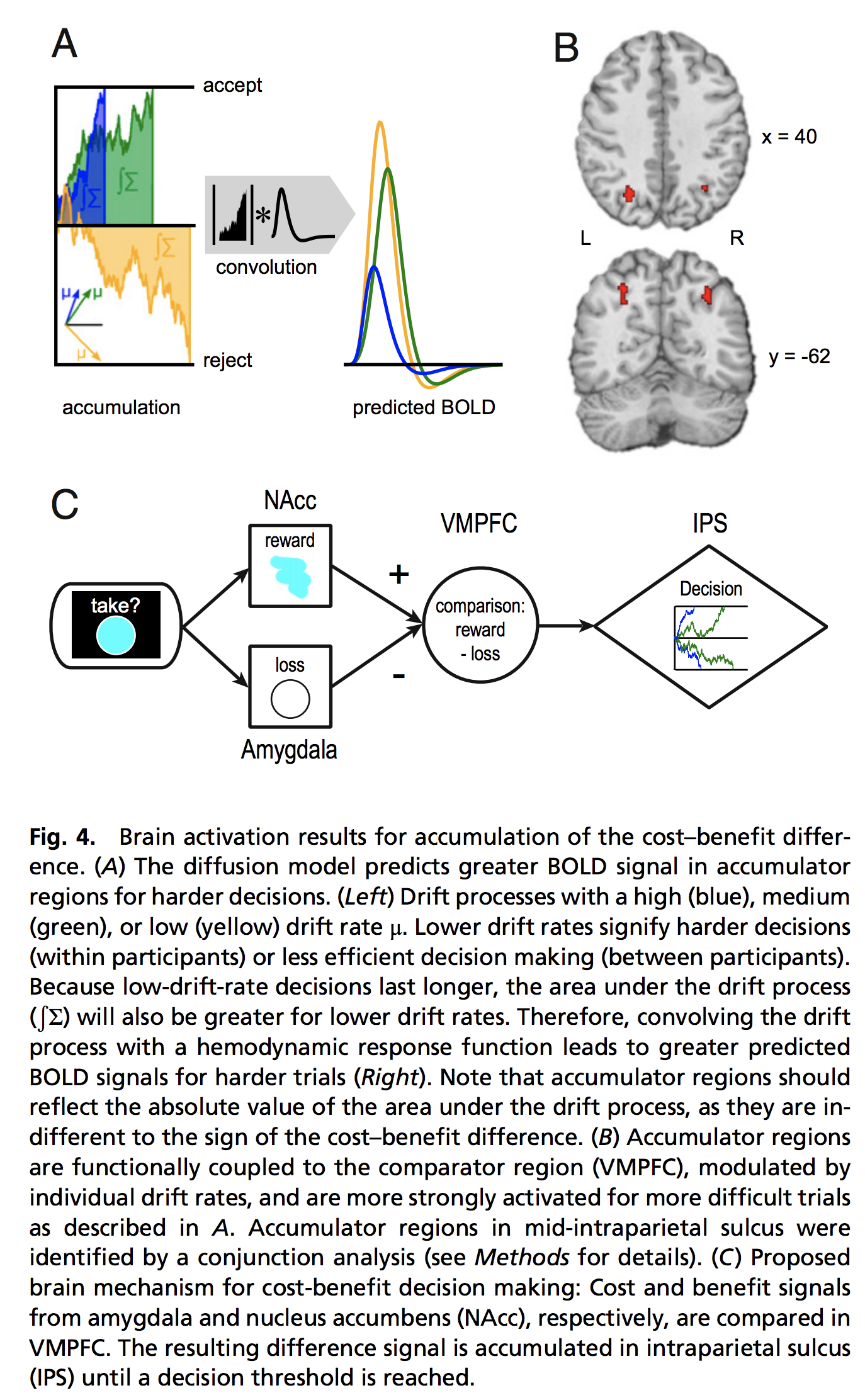
In one paper, colleagues and I used a sequential sampling model of decision making and fMRI to describe how costs and benefits are represented in the brain during decision making. In a related paper we looked for representations of probabilistic evidence during reward based decision making.
I have also done some work on reinforcement learning in general, and how it is influenced by social learning, leading to the proposal that following advice can in itself be rewarding. Some of this work has clear markers of a past time, like the small-sample target-gene study. This was exciting work at the time, but I would approach this research differently today.
More recently, I have used quantitative models of decision making to understand decision making in ADHD. We have published a meta analysis and a theoretical review which describes how we can use quantitative models of reinforcement learning and decision making to better understand the development and symptoms of Attention Deficit Hyperactivity Disorder. In an empirical paper, we used the drift diffusion model of decision making as a choice module in a reinforcement learning model to describe the effect of ADHD medication on decision making and operant learning.
Experimental and computational modelling research on how methylphenidate influences reinforcement learning, cost sensitivity, and decision making in adults with ADHD.
Neuroimaging study of how stimulant medication modulates brain networks and decision-making processes in adults with ADHD.
Behavioral and computational modelling investigation of reinforcement learning and decision-making mechanisms in ADHD.
Cognitive neuroscience and computational modelling research on reward processing, evidence accumulation, social advice, and neural correlates of decision making.
Journal Article
Journal Article
Journal Article
The thalamus is a highly connected subcortical structure that relays and integrates sensory and cortical information, which is critical for coherent and accurate perceptual awareness and cognition. Thalamic dysfunction is a classical finding in schizophrenia (SZ), and resting-state functional MRI has implicated somatomotor and frontal lobe thalamic dysconnectivity. However, it remains unclear whether these findings generalize to different psychotic disorders, are confined to specific thalamic sub-regions, and how they relate to structural thalamic alterations. Within-thalamic and thalamo-cortical functional connectivity was assessed using resting-state functional MRI data obtained from patients with SZ (n = 96), bipolar disorder (BD, n = 57), and healthy controls (HC, n = 280). Further, we used thalamic sub-regions as seeds to investigate specific cortical connectivity patterns, and performed structural analyses of thalamic volume and shape. Results showed reduced within-thalamic connectivity and thalamo-frontoparietal coupling in SZ and increased thalamo-somatomotor connectivity in BD. One thalamic sub-region showed increased sensory connectivity in SZ and eight sub-regions showed reductions with frontal and posterior areas. Reduced gray matter and shape abnormalities were found in frontal-projecting regions in both SZ and BD, but did not seem to explain reduced functional connectivity. Aberrant thalamo-cortical connectivity patterns in SZ and BD supports the notion of the thalamus as a key structure in the functional connectome across the psychosis spectrum, and the frontal and somatomotor anatomical distribution is in line with the characteristic cognitive and perceptual symptoms in psychotic disorders.
Journal Article
Modifying behavior to maximize reward is integral to adaptive decision-making. In rodents, the μ-opioid receptor (MOR) system encodes motivation and preference for high-value rewards. Yet it remains unclear whether and how human MORs contribute to value-based decision-making. We reasoned that if the human MOR system modulates value-based choice, this would be reflected by opposite effects of agonist and antagonist drugs. In a double-blind pharmacological cross-over study, 30 healthy men received morphine (10 mg), placebo, and the opioid antagonist naltrexone (50 mg). They completed a two-alternative decision-making task known to induce a considerable bias towards the most frequently rewarded response option. To quantify MOR involvement in this bias, we fitted accuracy and reaction time data with the drift–diffusion model (DDM) of decision-making. The DDM analysis revealed the expected bidirectional drug effects for two decision subprocesses. MOR stimulation with morphine increased the preference for the stimulus with high-reward probability (shift in starting point). Compared to placebo, morphine also increased, and naltrexone reduced, the efficiency of evidence accumulation. Since neither drug affected motor-coordination, speed-accuracy trade-off, or subjective state (indeed participants were still blinded after the third session), we interpret the MOR effects on evidence accumulation efficiency as a consequence of changes in effort exerted in the task. Together, these findings support a role for the human MOR system in value-based choice by tuning decision-making towards high-value rewards across stimulus domains.
Journal Article
Current reinforcement-learning models often assume simplified decision processes that do not fully reflect the dynamic complexities of choice processes. Conversely, sequential-sampling models of decision making account for both choice accuracy and response time, but assume that decisions are based on static decision values. To combine these two computational models of decision making and learning, we implemented reinforcement-learning models in which the drift diffusion model describes the choice process, thereby capturing both within- and across-trial dynamics. To exemplify the utility of this approach, we quantitatively fit data from a common reinforcement-learning paradigm using hierarchical Bayesian parameter estimation, and compared model variants to determine whether they could capture the effects of stimulant medication in adult patients with attention-deficit hyperactivity disorder (ADHD). The model with the best relative fit provided a good description of the learning process, choices, and response times. A parameter recovery experiment showed that the hierarchical Bayesian modeling approach enabled accurate estimation of the model parameters. The model approach described here, using simultaneous estimation of reinforcement-learning and drift diffusion model parameters, shows promise for revealing new insights into the cognitive and neural mechanisms of learning and decision making, as well as the alteration of such processes in clinical groups.
Journal Article
Insufficient suppression and connectivity of the default mode network (DMN) is a potential mediator of cognitive dysfunctions across various disorders, including attention deficit/hyperactivity disorder (ADHD). However, it remains unclear if alterations in sustained DMN suppression, variability and connectivity during prolonged cognitive engagement are implicated in adult ADHD pathophysiology, and to which degree methylphenidate (MPH) remediates any DMN abnormalities. This randomized, double-blinded, placebo-controlled, cross-over clinical trial of MPH (clinicaltrials.gov/ct2/show/NCT01831622) explored large-scale brain network dynamics in 20 adults with ADHD on and off MPH, compared to 27 healthy controls, while performing a reward based decision-making task. DMN task-related activation, variability, and connectivity were estimated and compared between groups and conditions using independent component analysis, dual regression, and Bayesian linear mixed models. The results show that the DMN exhibited more variable activation patterns in unmedicated patients compared to healthy controls. Group differences in functional connectivity both between and within functional networks were evident. Further, functional connectivity between and within attention and DMN networks was sensitive both to task performance and case-control status. MPH altered within-network connectivity of the DMN and visual networks, but not between-network connectivity or temporal variability. This study thus provides novel fMRI evidence of reduced sustained DMN suppression in adults with ADHD during value-based decision-making, a pattern that was not alleviated by MPH. We infer from multiple analytical approaches further support to the default mode interference hypothesis, in that higher DMN activation variability is evident in adult ADHD and associated with lower task performance.
Journal Article
Attention Deficit Hyperactivity Disorder (ADHD) is characterized by altered Decision-making (DM) and reinforcement learning (RL), for which competing theories propose alternative explanations. Computational modelling contributes to understanding DM and RL by integrating behavioural and neurobiological findings, and could elucidate pathogenic mechanisms behind ADHD. This review of neurobiological theories of ADHD describes predictions for the effect of ADHD on DM and RL as described by the Drift-Diffusion Model of DM (DDM) and a basic RL model. Empirical studies employing these models are also reviewed. While theories often agree on how ADHD should be reflected in model parameters, each theory implies a unique combination of predictions. Empirical studies agree with the theories’ assumptions of a lowered DDM drift rate in ADHD, while findings are less conclusive for boundary separation. The few studies employing RL models, support a lower choice sensitivity in ADHD, but not an altered learning rate. The discussion outlines research areas for further theoretical refinement in the ADHD field.
Journal Article
This paper looks for, but cannot find, evidence that links belief inconsistency to belief inaccuracy or economic loss. Economists with consistent (i.e., Bayesian) conditional beliefs about the sensitivity and positive predictive value of the Prostate Specific Antigen (PSA) test have unconditional beliefs about the risk of prostate cancer that are, if anything, less accurate than the beliefs of inconsistent non-Bayesians. PSA decisions depend more on the advice of doctors and family members than on beliefs about cancer risks. Men’s beliefs about the pros and cons of PSA testing do not explain self-reported PSA decisions. This absence of evidence that non-Bayesian beliefs lead to economic loss suggests that belief consistency may be relatively unimportant as a normative criterion in high-stakes decision tasks that reward accuracy instead of consistency. A technique is introduced for eliciting measures of both consistency and accuracy of an individual’s probabilistic beliefs.
Journal Article
BACKGROUND. The human brain is organized into functionally distinct modules of which interactions constitute the human functional connectome. Accumulating evidence has implicated perturbations in the patterns of brain connectivity across a range of neurologic and neuropsychiatric disorders, but little is known about diagnostic specificity. Schizophrenia and bipolar disorders are severe mental disorders with partly overlapping symptomatology. Neuroimaging has demonstrated brain network disintegration in the pathophysiologies; however, to which degree the 2 diagnoses present with overlapping abnormalities remains unclear. METHODS. We collected resting-state fMRI data from patients with schizophrenia or bipolar disorder and from healthy controls. Aiming to characterize connectivity differences across 2 severe mental disorders, we derived global functional connectivity using eigenvector centrality mapping, which allows for regional inference of centrality or importance in the brain network. RESULTS. Seventy-one patients with schizophrenia, 43 with bipolar disorder and 196 healthy controls participated in our study. We found significant effects of diagnosis in 12 clusters, where pairwise comparisons showed decreased global connectivity in high-centrality clusters. sensory regions in patients with schizophrenia and subcortical regions in both patient groups. Increased connectivity occurred in frontal and parietal clusters in patients with schizophrenia, with intermediate effects in those with bipolar disorder. Patient groups differed in most cortical clusters, with the strongest effects in sensory regions. LIMITATIONS. Methodological concerns of in-scanner motion and the use of full correlation measures may make analyses more vulnerable to noise. CONCLUSION. Our results show decreased eigenvector centrality of limbic structures in both patient groups and in sensory regions in patients with schizophrenia as well as increased centrality in frontal and parietal regions in both groups, with stronger effects in patients with schizophrenia.
Preprint
Journal Article
Perceptual decision making in monkeys relies on decision neurons, which accumulate evidence and maintain choices until a response is given. In humans, several brain regions have been proposed to accumulate evidence, but it is unknown if these regions also maintain choices. To test if accumulator regions in humans also maintain decisions we compared delayed and self-paced responses during a face/house discrimination decision making task. Computational modeling and fMRI results revealed dissociated processes of evidence accumulation and decision maintenance, with potential accumulator activations found in the dorsomedial prefrontal cortex, right inferior frontal gyrus and bilateral insula. Potential maintenance activation spanned the frontal pole, temporal gyri, precuneus and the lateral occipital and frontal orbital cortices. Results of a quantitative reverse inference meta-analysis performed to differentiate the functions associated with the identified regions did not narrow down potential accumulation regions, but suggested that response-maintenance might rely on a verbalization of the response.
Journal Article
OBJECTIVE. Deficient reward processing has gained attention as an important aspect of ADHD, but little is known about reward-based decision-making (DM) in adults with ADHD. This article summarizes research on DM in adult ADHD and contextualizes DM deficits by comparing them to attention deficits. METHOD. Meta-analytic methods were used to calculate average effect sizes for different DM domains and continuous performance task (CPT) measures. RESULTS. None of the 59 included studies (DM. 12 studies; CPT. 43; both. 4) had indications of publication bias. DM and CPT measures showed robust, small to medium effects. Large effect sizes were found for a drift diffusion model analysis of the CPT. CONCLUSION. The results support the existence of DM deficits in adults with ADHD, which are of similar magnitude as attention deficits. These findings warrant further examination of DM in adults with ADHD to improve the understanding of underlying neurocognitive mechanisms.
Journal Article
Both normative and many descriptive theories of decision making under risk are based on the notion that outcomes are weighted by their probability, with subsequent maximization of the (subjective) expected outcome. Numerous investigations from psychology, economics, and neuroscience have produced evidence consistent with this notion. However, this research has typically investigated choices involving relatively affect-poor, monetary outcomes. We compared choice in relatively affect-poor, monetary lottery problems with choice in relatively affect-rich medical decision problems. Computational modeling of behavioral data and model-based neuroimaging analyses provide converging evidence for substantial differences in the respective decision mechanisms. Relative to affect-poor choices, affect-rich choices yielded a more strongly curved probability weighting function of cumulative prospect theory, thus signaling that the psychological impact of probabilities is strongly diminished for affect-rich outcomes. Examining task-dependent brain activation, we identified a region-by-condition interaction indicating qualitative differences of activation between affect-rich and affect-poor choices. Moreover, brain activation in regions that were more active during affect-poor choices (e.g., the supramarginal gyrus) correlated with individual trial-by-trial decision weights, indicating that these regions reflect processing of probabilities. Formal reverse inference Neurosynth meta-analyses suggested that whereas affect-poor choices seem to be based on brain mechanisms for calculative processes, affect-rich choices are driven by the representation of outcomes’ emotional value and autobiographical memories associated with them. These results provide evidence that the traditional notion of expectation maximization may not apply in the context of outcomes laden with affective responses, and that understanding the brain mechanisms of decision making requires the domain of the decision to be taken into account.
Journal Article
Journal Article
Maximizing gains during probabilistic reinforcement learning requires the updating of choice - outcome expectations at the time when the feedback about a specific choice or action is given. Extant theories and evidence suggest that dopaminergic modulation plays a crucial role in reinforcement learning and the updating of choice - outcome expectations. Furthermore, recently a positive component of the event-related potential about 200 ms (P2) after feedback has been suggested to reflect such updating. The efficacy of dopaminergic modulation changes across the life span. However, to date investigations of age-related differences in feedback-related P2 during reinforcement learning are still scarce. The present study thus aims to investigate whether individual differences in the feedback-related P2 would be associated with polymorphic variations in a dopamine relevant gene PPP1R1B (also known as DARPP-32) and whether the genetic effect may differ between age groups. We observed larger P2 amplitudes in individuals carrying the genotype associated with higher dopamine receptor efficacy, i.e., a allele homozygotes of a single nucleotide polymorphism (rs907094) of the PPP1R1B gene. Moreover, this effect was more pronounced in children and older adults in comparison to adolescents and younger adults. Together, our findings indicate that polymorphic variations in a dopamine relevant gene are associated with individual differences in brain-evoked potentials of outcome updating and hint at the possibility that genotype effects on neurocognitive phenotypes may vary as a function of brain maturation and aging.
Journal Article
Context can influence the experience of any event. For instance, the thought that “it could be worse” can improve feelings towards a present misfortune. In this study we measured hedonic feelings, skin conductance, and brain activation patterns in 16 healthy volunteers who experienced moderate pain in two different contexts. In the “relative relief context,” moderate pain represented the best outcome, since the alternative outcome was intense pain. However, in the control context, moderate pain represented the worst outcome and elicited negative hedonic feelings. The context manipulation resulted in a “hedonic flip,” such that moderate pain elicited positive hedonics in the relative relief context. Somewhat surprisingly, moderate pain was even rated as pleasant in this context, despite being reported as painful in the control context. This “hedonic flip” was corroborated by physiological and functional neuroimaging data. When moderate pain was perceived as pleasant, skin conductance and activity in insula and dorsal anterior cingulate were significantly attenuated relative to the control moderate stimulus. “Pleasant pain” also increased activity in reward and valuation circuitry, including the medial orbitofrontal and ventromedial prefrontal cortices. Furthermore, the change in outcome hedonics correlated with activity in the periacqueductal grey (PAG) of the descending pain modulatory system (DPMS). The context manipulation also significantly increased functional connectivity between reward circuitry and the PAG, consistent with a functional change of the DPMS due to the altered motivational state. The findings of this study point to a role for brainstem and reward circuitry in a context-induced “hedonic flip” of pain.
Journal Article
Perceptual decision making is the process by which information from sensory systems is combined and used to influence our behavior. In addition to the sensory input, this process can be affected by other factors, such as reward and punishment for correct and incorrect responses. To investigate the temporal dynamics of how monetary punishment influences perceptual decision making in humans, we collected electroencephalography (EEG) data during a perceptual categorization task whereby the punishment level for incorrect responses was parametrically manipulated across blocks of trials. Behaviorally, we observed improved accuracy for high relative to low punishment levels. Using multivariate linear discriminant analysis of the EEG, we identified multiple punishment-induced discriminating components with spatially distinct scalp topographies. Compared with components related to sensory evidence, components discriminating punishment levels appeared later in the trial, suggesting that punishment affects primarily late postsensory, decision-related processing. Crucially, the amplitude of these punishment components across participants was predictive of the size of the behavioral improvements induced by punishment. Finally, trial-by-trial changes in prestimulus oscillatory activity in the alpha and gamma bands were good predictors of the amplitude of these components. We discuss these findings in the context of increased motivation/attention, resulting from increases in punishment, which in turn yields improved decision-related processing.
Journal Article
People often use expert advice when making decisions in our society, but how we are influenced by this advice has yet to be understood. To address this, using functional magnetic resonance imaging, we provided expert and novice advice to participants during an estimation task. Participants reported that they valued expert advice more than novice advice, and activity in the ventral striatum correlated with this valuation, even before decisions with the advice were made. When using advice, participants compared their initial opinion to their advisor’s opinion. This comparison, termed the “opinion difference”, influenced advice utilization and was represented in reward-sensitive brain regions. Finally, the left lateral orbitofrontal cortex integrated both the size of the opinion difference and the advisor’s level of expertise, and average activity in this area correlated with mean advice utilization across participants. Taken together, these findings provide neural evidence for how advice engenders behavioral change during the decision-making process.
Journal Article
Using neuroimaging in combination with computational modeling, this study shows that decision threshold modulation for reward maximization is accompanied by a change in effective connectivity within corticostriatal and cerebellar-striatal brain systems. Research on perceptual decision making suggests that people make decisions by accumulating sensory evidence until a decision threshold is crossed. This threshold can be adjusted to changing circumstances, to maximize rewards. Decision making thus requires effectively managing the amount of accumulated evidence versus the amount of available time. Importantly, the neural substrate of this decision threshold modulation is unknown. Participants performed a perceptual decision-making task in blocks with identical duration but different reward schedules. Behavioral and modeling results indicate that human subjects modulated their decision threshold to maximize net reward. Neuroimaging results indicate that decision threshold modulation was achieved by adjusting effective connectivity within corticostriatal and cerebellar-striatal brain systems, the former being responsible for processing of accumulated sensory evidence and the latter being responsible for automatic, subsecond temporal processing. Participants who adjusted their threshold to a greater extent (and gained more net reward) also showed a greater modulation of effective connectivity. These results reveal a neural mechanism that underlies decision makers’ abilities to adjust to changing circumstances to maximize reward.
Journal Article
Learning by following explicit advice is fundamental for human cultural evolution, yet the neurobiology of adaptive social learning is largely unknown. Here, we used simulations to analyze the adaptive value of social learning mechanisms, computational modeling of behavioral data to describe cognitive mechanisms involved in social learning, and model-based functional magnetic resonance imaging (fMRI) to identify the neurobiological basis of following advice. One-time advice received before learning had a sustained influence on people’s learning processes. This was best explained by social learning mechanisms implementing a more positive evaluation of the outcomes from recommended options. Computer simulations showed that this “outcome-bonus” accumulates more rewards than an alternative mechanism implementing higher initial reward expectation for recommended options. fMRI results revealed a neural outcome-bonus signal in the septal area and the left caudate. This neural signal coded rewards in the absence of advice, and crucially, it signaled greater positive rewards for positive and negative feedback after recommended rather than after non-recommended choices. Hence, our results indicate that following advice is intrinsically rewarding. A positive correlation between the model’s outcome-bonus parameter and amygdala activity after positive feedback directly relates the computational model to brain activity. These results advance the understanding of social learning by providing a neurobiological account for adaptive learning from advice.
Journal Article
When we make decisions, the benefits of an option often need to be weighed against accompanying costs. Little is known, however, about the neural systems underlying such cost-benefit computations. Using functional magnetic resonance imaging and choice modeling, we show that decision making based on cost-benefit comparison can be explained as a stochastic accumulation of cost-benefit difference. Model-driven functional MRI shows that ventromedial and left dorsolateral prefrontal cortex compare costs and benefits by computing the difference between neural signatures of anticipated benefits and costs from the ventral striatum and amygdala, respectively. Moreover, changes in blood oxygen level dependent (BOLD) signal in the bilateral middle intraparietal sulcus reflect the accumulation of the difference signal from ventromedial prefrontal cortex. In sum, we show that a neurophysiological mechanism previously established for perceptual decision making, that is, the difference-based accumulation of evidence, is fundamental also in value-based decisions. The brain, thus, weighs costs against benefits by combining neural benefit and cost signals into a single, difference-based neural representation of net value, which is accumulated over time until the individual decides to accept or reject an option.
Journal Article
The mesocorticolimbic dopamine (DA) system linking the dopaminergic midbrain to the prefrontal cortex and subcortical striatum has been shown to be sensitive to reinforcement in animals and humans. Within this system, coexistent segregated striato-frontal circuits have been linked to different functions. In the present study, we tested patients with Parkinson’s disease (PD), a neurodegenerative disorder characterized by dopaminergic cell loss, on two reward-based learning tasks assumed to differentially involve dorsal and ventral striato-frontal circuits. 15 non-depressed and non-demented PD patients on levodopa monotherapy were tested both on and off medication. Levodopa had beneficial effects on the performance on an instrumental learning task with constant stimulus-reward associations, hypothesized to rely on dorsal striato-frontal circuits. In contrast, performance on a reversal learning task with changing reward contingencies, relying on ventral striato-frontal structures, was better in the unmedicated state. These results are in line with the “overdose hypothesis” which assumes detrimental effects of dopaminergic medication on functions relying upon less affected regions in PD. This study demonstrates, in a within-subject design, a double dissociation of dopaminergic medication and performance on two reward-based learning tasks differing in regard to whether reward contingencies are constant or dynamic. There was no evidence for a dose effect of levodopa on reward-based behavior with the patients’ actual levodopa dose being uncorrelated to their performance on the reward-based learning tasks.
Journal Article
Adaptive decision making depends on the accurate representation of rewards associated with potential choices. These representations can be acquired with reinforcement learning (RL) mechanisms, which use the prediction error (PE, the difference between expected and received rewards) as a learning signal to update reward expectations. While EEG experiments have highlighted the role of feedback-related potentials during performance monitoring, important questions about the temporal sequence of feedback processing and the specific function of feedback-related potentials during reward-based decision making remain. Here, we hypothesized that feedback processing starts with a qualitative evaluation of outcome-valence, which is subsequently complemented by a quantitative representation of PE magnitude. Results of a model-based single-trial analysis of EEG data collected during a reversal learning task showed that around 220ms after feedback outcomes are initially evaluated categorically with respect to their valence (positive vs. negative). Around 300ms, and parallel to the maintained valence-evaluation, the brain also represents quantitative information about PE magnitude, thus providing the complete information needed to update reward expectations and to guide adaptive decision making. Importantly, our single-trial EEG analysis based on PEs from an RL model showed that the feedback-related potentials do not merely reflect error awareness, but rather quantitative information crucial for learning reward contingencies.
Journal Article
In our everyday life, we often have to make decisions with risky consequences, such as choosing a restaurant for dinner or choosing a form of retirement saving. To date, however, little is known about how the brain processes risk. Recent conceptualizations of risky decision making highlight that it is generally associated with emotions but do not specify how emotions are implicated in risk processing. Moreover, little is known about risk processing in non-choice situations and how potential losses influence risk processing. Here we used quantitative meta-analyses of functional magnetic resonance imaging experiments on risk processing in the brain to investigate (1) how risk processing is influenced by emotions, (2) how it differs between choice and non-choice situations, and (3) how it changes when losses are possible. By showing that, over a range of experiments and paradigms, risk is consistently represented in the anterior insula, a brain region known to process aversive emotions such as anxiety, disappointment, or regret, we provide evidence that risk processing is influenced by emotions. Furthermore, our results show risk-related activity in the dorsolateral prefrontal cortex and the parietal cortex in choice situations but not in situations in which no choice is involved or a choice has already been made. The anterior insula was predominantly active in the presence of potential losses, indicating that potential losses modulate risk processing.
Journal Article
To make decisions based on the value of different options, we often have to combine different sources of probabilistic evidence. For example, when shopping for strawberries on a fruit stand, one uses their color and size to infer-with some uncertainty-which strawberries taste best. Despite much progress in understanding the neural underpinnings of value-based decision making in humans, it remains unclear how the brain represents different sources of probabilistic evidence and how they are used to compute value signals needed to drive the decision. Here, we use a visual probabilistic categorization task to show that regions in ventral temporal cortex encode probabilistic evidence for different decision alternatives, while ventromedial prefrontal cortex integrates information from these regions into a value signal using a difference-based comparator operation.
Journal Article
Many decisions people make can be described as decisions under risk. Understanding the mechanisms that drive these decisions is an important goal in decision neuroscience. Two competing classes of risky decision making models have been proposed to describe human behavior, namely utility-based models and risk-return models. Here we used a novel investment decision task that uses streams of (past) returns as stimuli to investigate how consistent the two classes of models are with the neurobiological processes underlying investment decisions (where outcomes usually follow continuous distributions). By showing (a) that risk-return models can explain choices behaviorally and (b) that the components of risk-return models (value, risk, and risk attitude) are represented in the brain during choices, we provide evidence that risk-return models describe the neural processes underlying investment decisions well. Most importantly, the observed correlation between risk and brain activity in the anterior insula during choices supports risk-return models more than utility-based models because risk is an explicit component of risk-return models but not of the utility-based models.
Journal Article
The ability to rapidly and flexibly adapt decisions to available rewards is crucial for survival in dynamic environments. Reward-based decisions are guided by reward expectations that are updated based on prediction errors, and processing of these errors involves dopaminergic neuromodulation in the striatum. To test the hypothesis that the COMT gene Val(158)Met polymorphism leads to interindividual differences in reward-based learning, we used the neuromodulatory role of dopamine in signaling prediction errors. We show a behavioral advantage for the phylogenetically ancestral Val/Val genotype in an instrumental reversal learning task that requires rapid and flexible adaptation of decisions to changing reward contingencies in a dynamic environment. Implementing a reinforcement learning model with a dynamic learning rate to estimate prediction error and learning rate for each trial, we discovered that a higher and more flexible learning rate underlies the advantage of the Val/Val genotype. Model-based fMRI analysis revealed that greater and more differentiated striatal fMRI responses to prediction errors reflect this advantage on the neurobiological level. Learning rate-dependent changes in effective connectivity between the striatum and prefrontal cortex were greater in the Val/Val than Met/Met genotype, suggesting that the advantage results from a downstream effect of the prefrontal cortex that is presumably mediated by differences in dopamine metabolism. These results show a critical role of dopamine in processing the weight a particular prediction error has on the expectation updating for the next decision, thereby providing important insights into neurobiological mechanisms underlying the ability to rapidly and flexibly adapt decisions to changing reward contingencies.
Journal Article
This research examines decisions from experience in restless bandit problems. Two experiments revealed four main effects. (1) Risk neutrality. the typical participant did not learn to become risk averse, a contradiction of the hot stove effect. (2) Sensitivity to the transition probabilities that govern the Markov process. (3) Positive recency. the probability of a risky choice being repeated was higher after a win than after a loss. (4) Inertia. the probability of a risky choice being repeated following a loss was higher than the probability of a risky choice after a safe choice. These results can be described with a simple contingent sampler model, which assumes that choices are made based on small samples of experiences contingent on the current state.
Journal Article
Decision making often takes place in social environments where other actors influence individuals’ decisions. The present article examines how advice affects individual learning. Five social learning models combining advice and individual learning-four based on reinforcement learning and one on Bayesian learning-and one individual learning model are tested against each other. In two experiments, some participants received good or bad advice prior to a repeated multioption choice task. Receivers of advice adhered to the advice, so that good advice improved performance. The social learning models described the observed learning processes better than the individual learning model. Of the models tested, the best social learning model assumes that outcomes from recommended options are more positively evaluated than outcomes from nonrecommended options. This model correctly predicted that receivers first adhere to advice, then explore other options, and finally return to the recommended option. The model also predicted accurately that good advice has a stronger impact on learning than bad advice. One-time advice can have a long-lasting influence on learning by changing the subjective evaluation of outcomes of recommended options.
Journal Article
What are the cognitive processes underlying cooperation in groups? This question is addressed by examining how well a reciprocity model, two learning models, and social value orientation can predict cooperation in two iterated n-person social dilemmas with continuous contributions. In the first of these dilemmas, the public goods game, participants made repeated decisions about contributions to one public good. In the second, the social dilemma network game, the public good was divided into multiple two-person public goods, thus allowing selective cooperation. Both dilemmas were conducted in an experiment in which the participants had to search actively for information about other players’ past behavior on a computerized information board. As predicted by the reciprocity model, participants cooperated substantially more in the social dilemma network game. The reciprocity model proved most successful of the models compared in predicting participants’ information search and
Journal Article
Whereas previous studies on how people make forecasts of sports events focused primarily on experts, we examined how laypeople do this task. In particular, we (a) tested the recognition heuristic [Goldstein, D. G., & Gigerenzer, G. (2002). Models of ecological rationality. the recognition heuristic. Psychological Review, 109, 75-90], which requires partial ignorance, against four alternative mechanisms in describing laypeople’s forecasts for the European Soccer Championships 2004; (b) evaluated how well recognition predicted the outcomes of the matches compared to direct indicators of team strength (e.g., past performance, rankings); and (c) studied the less-is-more effect–the phenomenon that knowing less leads to more correct forecasts than knowing more–which can occur when the recognition heuristic is used. Two groups of participants (laypeople, experts) made forecasts for the first-round matches of the tournament. Of the five candidate mechanisms, the recognition heuristic predicted laypeople’s forecasts best. when applicable, it accounted for 90% of the forecasts. The recognition heuristic correctly predicted the actual winner of the matches substantially better than chance but did not achieve the accuracy of direct indicators of team strength. The experts made more correct forecasts than the laypeople. Moreover, we found no benefit of ignorance among the group of laypeople, although the conditions for a less-is-more effect specified by Goldstein and Gigerenzer were fulfilled.